
Summer brings intense sunlight that can quickly turn vibrant succulents into scorched, discolored plants. Unlike humans, succulents can’t escape the heat—but with the right adjustments to water and shade, you can protect them from irreversible damage.
Dig in!
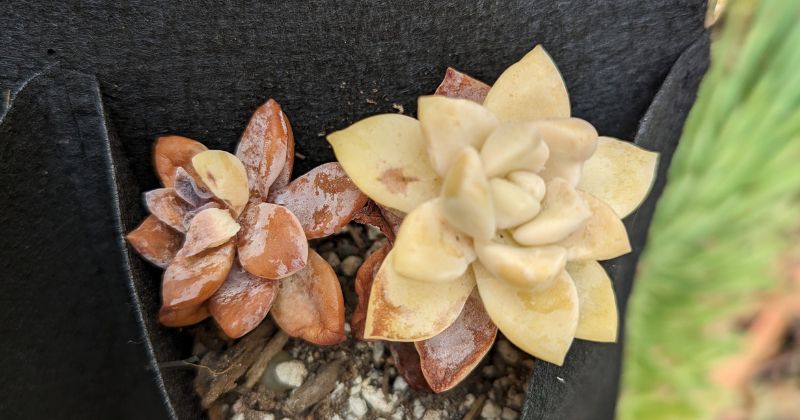
How to Spot Sunburned Succulents
Sunburn manifests differently than other issues like overwatering or pests. Key signs include:
1. Discolored Patches
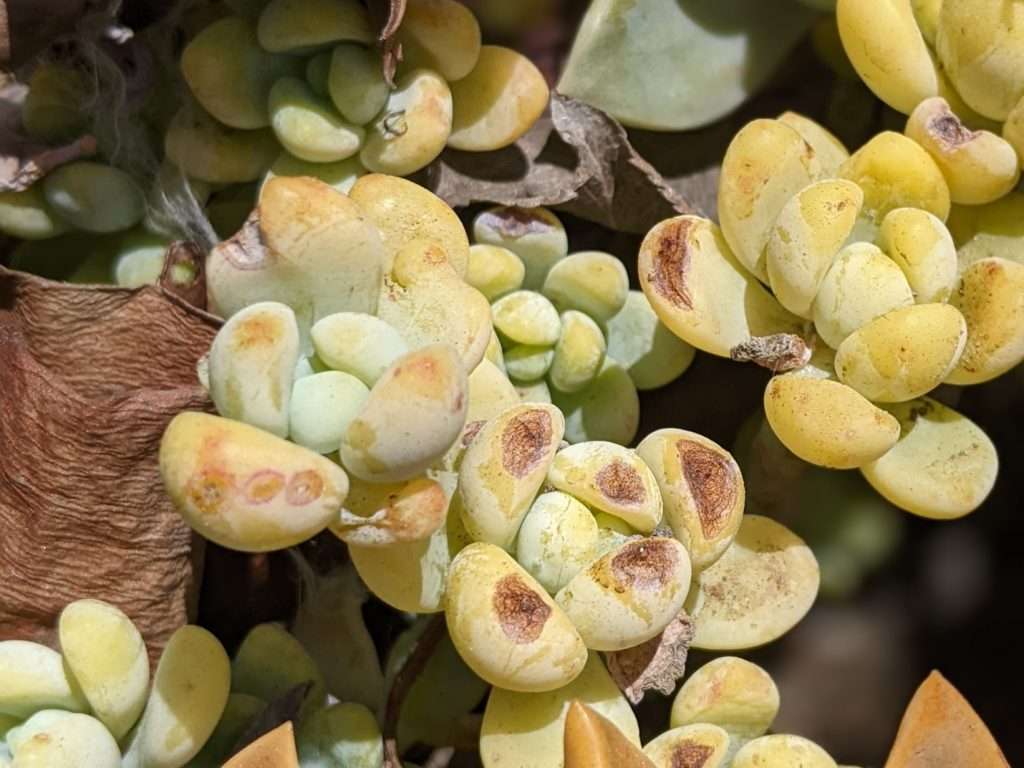
- White, yellow, or brown crispy spots (most common in Echeveria, Sedum).
- Bleached or translucent areas (severe cell damage).
2. Shriveled or Scorched Leaves
- Leaves dry out from the tips inward.
- Unlike underwatering, sunburn causes localized damage rather than uniform wrinkling.
3. Permanent Scarring
- Damaged leaves won’t recover but can be removed if unsightly.
Note: Some red/purple stress colors are normal (and desirable) in bright light, but crispiness is not.
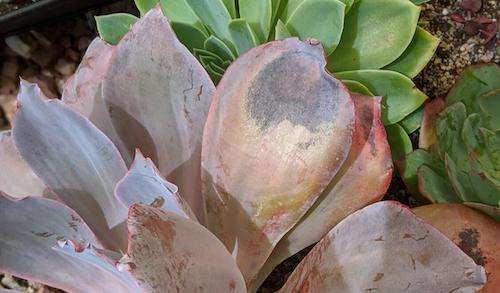
Why Succulents Burn in Summer
1. Sudden Light Exposure
- Moving indoor plants directly outdoors without acclimation is the #1 cause of burns.
- Solution: Gradually increase sun exposure over 1-2 weeks (start with 1 hour of morning sun).
2. Heat Amplification
- Dark pots, concrete surfaces, and walls radiate extra heat.
- Solution: Use light-colored pots or elevate containers.
3. Water Droplets Magnify Sunlight
- Morning watering can leave droplets that act as tiny magnifying glasses, burning leaves.
- Solution: Water at soil level, not overhead.
4. Species-Specific Sensitivity
- High tolerance: Agave, Opuntia, Sempervivum.
- Low tolerance: Haworthia, Gasteria, some Echeveria (e.g., E. laui).
Watering Strategies to Prevent Sunburn
1. Water Deeply but Less Frequently
- Soak soil thoroughly until water runs out of the bottom of the pot, then let it dry completely.
- Summer watering frequency:
- Outdoor pots: Every 7-10 days (adjust for heatwaves).
- In-ground: Every 2-3 weeks (depends on soil drainage).
2. Avoid Midday Watering
- Water early morning (before 9 AM) to prevent rapid evaporation and leaf scorch.
3. Use the “Shade Test”
- If leaves feel hot to the touch at noon, they need more shade.
Shade Solutions for Potted and In-Ground Succulents
For Potted Succulents:
- 30-50% shade cloth (ideal for balconies/patios).
- Sheer curtains for east/west-facing windows.
- Move under trees or eaves during peak sun (11 AM–3 PM).
For In-Ground Succulents:
- Plant near drought-tolerant shrubs (e.g., Lavender) for dappled shade.
- Temporary shade: Use umbrellas or mesh screens during heatwaves.
Species-Specific Shade Needs
| Full Sun Tolerant | Partial Shade Preferred |
|---|---|
| Agave | Haworthia |
| Sedum | Gasteria |
| Opuntia (Prickly Pear) | Aloe (some varieties) |
3 Common Mistakes That Cause Sunburn
- Assuming “Drought-Tolerant” Means “Sunproof”
- Even desert natives can burn in extreme heat.
- Overwatering to “Cool” Plants
- Wet soil + heat = root rot. The roots quite literally cook. Stick to deep, infrequent watering.
- Ignoring Microclimates
- A south-facing wall vs. open ground can differ by 10+°F.
How to Save a Sunburned Succulent
- Move to shade immediately.
- Do not remove damaged leaves (they still photosynthesize).
- Wait to water until the plant recovers (1-2 weeks).
Note: Scars won’t heal, but new growth will be healthy.
Preventing sunburn is easier than reversing it. Acclimate plants slowly, water strategically, and provide shade during peak heat. Monitor sensitive species like Haworthia extra closely, while tough varieties like Agave can handle more abuse.