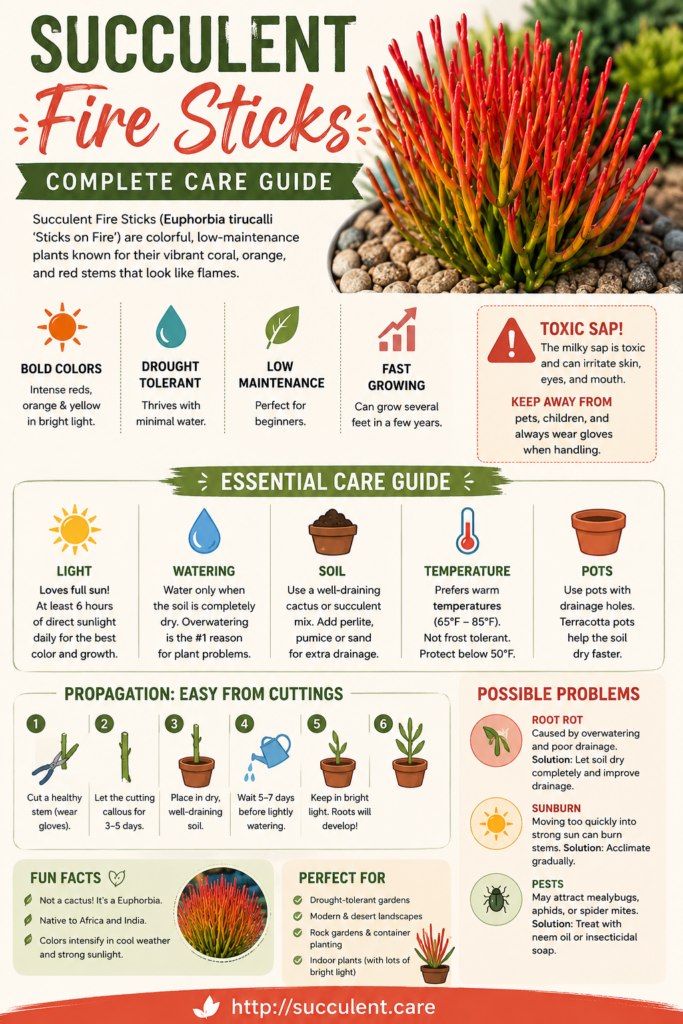
If you’ve ever seen a bright coral, orange, or red succulent that looks like glowing pencils on fire, you were probably looking at succulent fire sticks. This eye-catching plant has become incredibly popular in drought-tolerant landscaping, modern gardens, and indoor succulent collections because of its bold colors and unusual shape.
These are low maintenance, fast growing, and visually dramatic. But despite their beauty, many people don’t realize this plant comes with important care requirements and safety concerns. In this complete guide, you’ll learn exactly how to grow, care for, propagate, and safely handle succulent fire sticks.
Dig in!
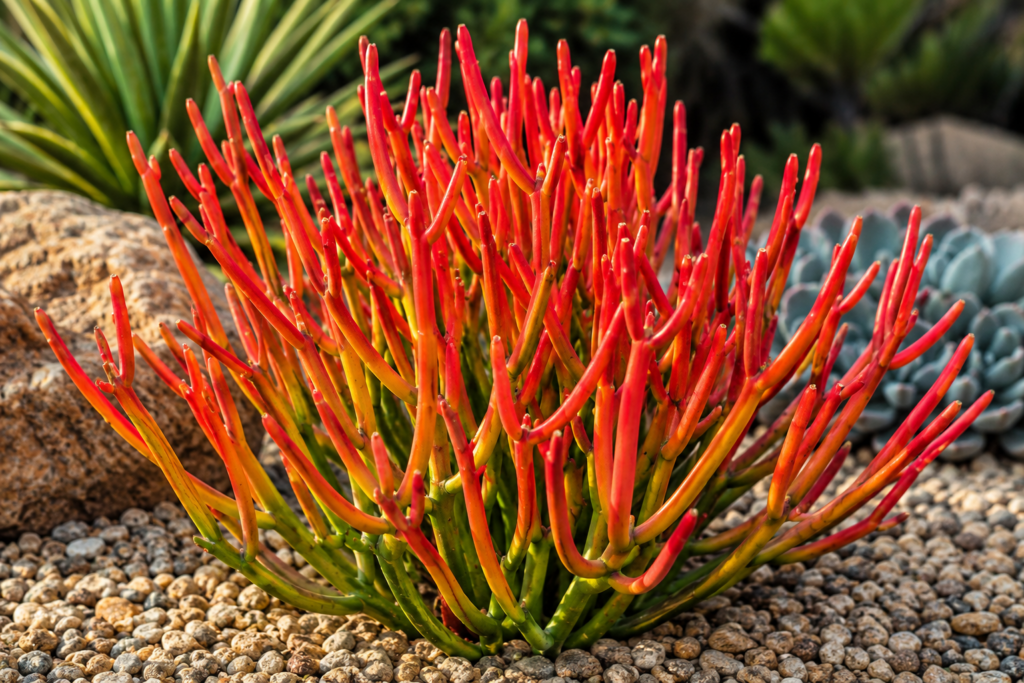
What Are Succulent Fire Sticks?
Succulent Fire Sticks are a colorful succulent shrub scientifically known as Euphorbia tirucalli ‘Sticks on Fire’. They belong to the Euphorbia family and are native to parts of Africa and India.
This succulent is commonly called:
- Fire sticks plant
- Pencil cactus
- Sticks on fire
- Red pencil cactus
- Fire pencil succulent
Despite the nickname “pencil cactus,” succulent fire sticks are not true cacti. They are euphorbias, which means they produce a milky white sap that can irritate skin and eyes.
The plant grows long, thin cylindrical branches that resemble pencils. During cooler weather or periods of bright sunlight, the tips turn vibrant shades of red, orange, pink, and yellow, giving the appearance of flames.
Why Succulent Fire Sticks Are So Popular
There are several reasons they have become a favorite among succulent lovers and landscapers.
Incredible Color
Few succulents produce such intense warm colors naturally. The fiery red and orange tones make this plant stand out in any garden.
Drought Tolerance
‘Sticks on Fire‘ thrive in dry conditions and need very little water once established.
Easy Maintenance
These plants are beginner friendly because they tolerate neglect better than many other succulents.
Fast Growth
Unlike slow-growing succulents, fire sticks can grow surprisingly quickly in the right conditions.
Modern Landscape Appeal
Their sculptural appearance works beautifully in modern, desert, and Mediterranean-style landscaping.
Size and Growth
Succulent fire sticks can become much larger than most people expect.
Outdoor plants may reach:
- 4 to 8 feet tall
- 3 to 5 feet wide
In frost-free climates like California and Arizona, mature plants can eventually become massive shrubs.
Indoor plants usually stay smaller but can still grow several feet tall over time.
Best Light for Succulent Fire Sticks
Lighting is one of the most important factors when growing any succulents.
Outdoor Lighting
- Full sun
- Bright direct light
- At least 6 hours of sunlight daily
More sunlight usually means stronger red coloration.
Indoor Lighting
If grown indoors, place them:
- Near a south-facing window
- In the brightest area of your home
- Under grow lights if natural light is limited
Without enough light, the plant may turn mostly green and become leggy.
How Often to Water
One of the biggest mistakes people make with ‘Sticks on Fire‘ is overwatering.
These plants store water inside their stems and prefer dry soil.
Watering Guidelines
During spring and summer:
- Water when soil is completely dry
During fall and winter:
- Water very sparingly
Outdoor established plants:
- May survive mostly on rainfall in some climates
Signs of Overwatering
Overwatered succulent fire sticks may develop:
- Mushy stems
- Yellowing branches
- Rotting roots
- Drooping growth
Signs of Underwatering
Underwatered plants may show:
- Wrinkled stems
- Dry branches
- Slowed growth
However, succulent fire sticks tolerate underwatering much better than overwatering.
Best Soil
‘Sticks on Fire‘ need extremely well-draining soil.
A good succulent mix should contain:
- Potting soil
- Perlite
- Pumice
- Sand
- Small gravel
Avoid dense, moisture-retaining soil because it can quickly cause root rot.
Best Pots for Succulent Fire Sticks
If growing in containers, choose pots with drainage holes.
Terracotta pots work especially well because they allow soil to dry faster.
Avoid pots without drainage unless you are highly experienced with succulent care.
Temperature and Climate Needs
Succulent fire sticks prefer warm temperatures.
Ideal temperatures:
- 65°F to 85°F
They are not frost tolerant and can suffer damage below freezing temperatures.
In colder climates, many people grow ‘Sticks on Fire‘ indoors during winter.
Are Succulent Fire Sticks Toxic?
Yes. This is one of the most important things to understand about succulent fire sticks.
The milky sap inside the plant is toxic and irritating.
Sap Exposure Can Cause
- Skin irritation
- Burning sensations
- Rashes
- Eye injuries
- Severe discomfort if ingested
Keep ‘Sticks on Fire‘ away from:
- Pets
- Small children
- Eyes and mouth
Always wear gloves when pruning or propagating the plant.
If sap gets in your eyes, seek medical attention immediately.
How to Propagate Succulent Fire Sticks
These are very easy to propagate from cuttings.
Step-by-Step Propagation
- Wear gloves and eye protection
- Cut a healthy branch
- Let the cutting dry and callous for several days
- Place the cutting in dry succulent soil
- Wait several days before lightly watering
- Keep in bright indirect light until roots develop
Propagation is usually very successful when done properly.
Common Problems With Succulent Fire Sticks
Although hardy, ‘Sticks on Fire‘ can still develop problems.
Root Rot
Root rot is the most common issue and is almost always caused by overwatering.
Symptoms include:
- Black stems
- Mushy branches
- Collapsing growth
Sunburn
Although they love sun, plants moved suddenly from shade into intense sunlight can burn.
Acclimate gradually when increasing sun exposure.
Pests
Occasionally succulent fire sticks may attract:
- Mealybugs
- Spider mites
- Aphids
Neem oil or insecticidal soap can help control infestations.
Why Are My Succulent Fire Sticks Turning Green?
Many people buy brightly colored succulent fire sticks only to watch them turn green later.
This is usually caused by:
- Insufficient sunlight
- Warmer temperatures
- Seasonal color changes
Cool temperatures and strong sunlight trigger the brightest red and orange tones.
Landscaping With Succulent Fire Sticks
Succulent fire sticks are widely used in drought-tolerant landscaping.
They pair beautifully with:
- Agaves
- Echeverias
- Cacti
- Aloe plants
- Decorative rocks
- Modern concrete planters
Their bold shape creates strong visual contrast in gardens.
Can Succulent Fire Sticks Grow Indoors?
Yes, but indoor success depends heavily on light.
Indoor succulent fire sticks need:
- Bright direct sunlight
- Minimal watering
- Good airflow
- Well-draining soil
Without enough light, indoor plants often become pale green and stretched out.
How Fast Do Succulent Fire Sticks Grow?
Succulent fire sticks are relatively fast growers compared to many succulents.
Growth speed depends on:
- Sunlight
- Temperature
- Watering
- Soil quality
In warm climates, they may grow several feet within a few years.
Are Succulent Fire Sticks Good for Beginners?
Yes, with one important caution.
They are easy to grow but require safe handling because of their toxic sap.
For beginners who:
- Want low-maintenance plants
- Live in warm climates
- Love colorful succulents
Succulent fire sticks can be an excellent choice.
Succulent Fire Sticks Care Tips
Here are the most important care tips to remember:
- Give plenty of sunlight
- Avoid overwatering
- Use fast-draining soil
- Protect from frost
- Wear gloves when handling
- Keep away from pets and children
Following these basics will help your plant thrive for years.
Frequently Asked Questions About Succulent Fire Sticks
Are succulent fire sticks poisonous to dogs and cats?
Yes. The sap is toxic and can irritate pets if chewed or touched.
How often should I water succulent fire sticks?
Only water when the soil is fully dry.
Why are my succulent fire sticks losing color?
Usually due to insufficient sunlight or warmer temperatures.
Can succulent fire sticks survive winter?
Only in mild climates without frost. Otherwise, they should be protected indoors.
Are succulent fire sticks actually cacti?
No. They are euphorbias, not true cacti.
Conclusion
Succulent fire sticks are one of the most visually striking succulents you can grow. Their fiery colors, sculptural shape, and drought tolerance make them perfect for modern landscapes and sunny succulent gardens.
With proper sunlight, careful watering, and safe handling, succulent fire sticks can become a stunning focal point in your plant collection. While the toxic sap requires caution, the plant’s beauty and low-maintenance nature make it worth the extra care.
Whether you grow them indoors in containers or outdoors in a desert-inspired garden, succulent fire sticks bring dramatic color and texture that few other succulents can match.