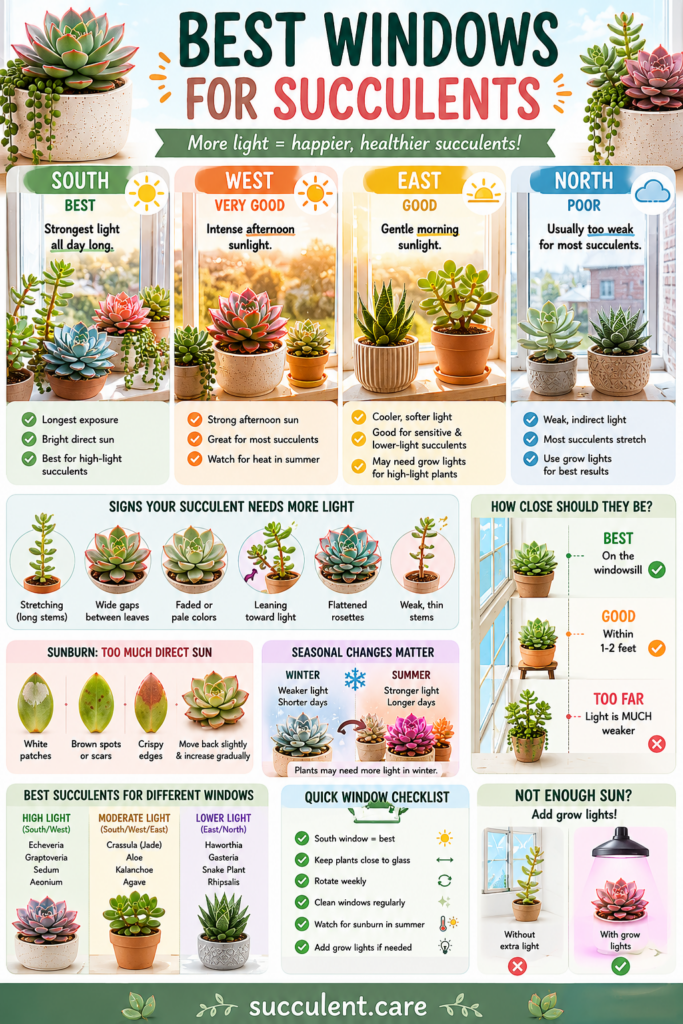
Finding the best window for succulents can completely change how your indoor plants grow. Many succulent problems that seem mysterious — stretching, leaning, fading color, weak growth, and even rot — often start with poor lighting.
Most succulents naturally grow in bright, sunny environments with direct light for much of the day. Indoors, windows become your plant’s primary source of energy. The problem is that not all windows provide enough light for succulents to stay healthy long term.
In this guide, we’ll break down the best windows for succulents, which directions work best, what mistakes to avoid, and how to tell if your plants need more light.
Dig in!
Why Window Placement Matters for Succulents
Light is the single most important factor in indoor succulent care.
Succulents use sunlight to:
- Stay compact
- Maintain vibrant colors
- Grow strong roots
- Produce healthy leaves
- Prevent stretching
Even homes that feel bright to humans can actually be too dim for many succulents.
Indoor light is much weaker than outdoor sunlight because:
- Glass filters light
- Roof overhangs reduce exposure
- Trees block sunlight
- Walls create shadows
- Days are shorter indoors
This is why choosing the best windows for succulents matters so much.
Best Window Direction for Succulents
Window direction dramatically affects how much sunlight your plants receive.
South-Facing Windows: Best for Most Succulents
South-facing windows are usually the best windows for succulents in the Northern Hemisphere.
These windows provide:
- The longest daily light exposure
- Strong direct sunlight
- Bright afternoon light
- More consistent year-round lighting
High-light succulents especially benefit from south-facing windows.
Examples include:
- Echeveria
- Graptopetalum
- Sedum
- Aeonium
These plants often stretch quickly in weaker windows.
Benefits of South-Facing Windows
Advantages include:
- Strongest indoor light
- Better color development
- Reduced stretching
- Faster drying soil
- Stronger growth
If you only have one bright window available, this is usually your best option.
West-Facing Windows: Very Good Option
West-facing windows receive strong afternoon sunlight.
These windows can work very well for succulents because afternoon sun is often intense.
West windows are especially helpful for:
- Moderate-light succulents
- Smaller collections
- Supplemental grow light setups
Potential Downsides
In hot climates, west-facing windows can become extremely warm during summer.
Watch for:
- Sunburn
- Heat stress
- Crispy leaves
- Overheating near glass
Moving plants slightly back from the window can help.
East-Facing Windows: Good for Some Succulents
East-facing windows receive gentle morning sunlight.
Morning sun is softer and cooler than afternoon light, making east windows suitable for:
- Lower-light succulents
- Sensitive plants
- Beginner collections
Good candidates include:
- Haworthia
- Gasteria
- Rhipsalis
Limitations of East Windows
Many high-light succulents still struggle long term in east-facing windows alone.
You may notice:
- Gradual stretching
- Fading colors
- Flattened rosettes
Grow lights often help supplement east-facing windows.
North-Facing Windows: Usually Too Weak
North-facing windows usually provide the weakest indoor lighting.
Most desert succulents eventually struggle in these conditions.
Common problems include:
- Etiolation
- Leaning growth
- Pale leaves
- Weak stems
- Slow growth
Low-light tolerant plants may survive better, but most succulents will eventually need stronger light.
If north-facing windows are your only option, grow lights are strongly recommended.
How Far From the Window Should Succulents Be?
Distance matters more than many people realize.
Light intensity drops rapidly even a few feet away from windows.
A succulent directly on a sunny windowsill may receive dramatically more light than one sitting across the room.
General Rule
The closer to the window, the better.
High-light succulents often need to sit:
- Directly on the sill
- Within 1–2 feet of bright windows
Plants farther away may slowly decline over time.
Seasonal Changes Affect Indoor Light
One of the biggest indoor succulent challenges is changing seasonal light.
Winter sunlight is:
- Weaker
- Shorter
- Less direct
A window that works well in summer may become insufficient in winter.
This is why many indoor succulents suddenly stretch during colder months.
Signs Your Succulent Needs a Better Window
Your plant will usually tell you when lighting is inadequate.
Stretching
This is the biggest warning sign.
Look for:
- Long stems
- Wide leaf gaps
- Leaning growth
Flattened Rosettes
Rosette succulents open up dramatically when searching for light.
Faded Colors
Bright reds, purples, oranges, and pinks often disappear indoors with weak lighting.
Leaning Toward Light
Plants bending toward windows are actively searching for more sun.
Can Succulents Get Too Much Window Sun?
Yes — especially if plants suddenly move from low light into intense direct sun.
Window sun can become surprisingly intense during:
- Summer heat waves
- Hot west-facing exposure
- Bright south-facing glass
Signs of Sunburn
Watch for:
- White patches
- Brown scars
- Crispy leaves
- Sudden discoloration
Always increase light gradually when moving succulents.
Window Screens and Curtains Matter
Many people do not realize how much screens and curtains reduce light.
Light-blocking factors include:
- Window tint
- Sheer curtains
- Dirty glass
- Outdoor shade trees
- Deep roof overhangs
Cleaning windows regularly can actually improve succulent growth.
Apartments and Low-Light Homes
Many apartment growers struggle because of:
- Small windows
- North-facing units
- Nearby buildings
- Limited sun exposure
If your home lacks strong windows, grow lights are often the best solution.
Modern full-spectrum LED grow lights can dramatically improve indoor succulent health.
Best Succulents for Lower-Light Windows
Some succulents tolerate weaker windows better than others.
Good options include:
- Haworthia
- Gasteria
- Sansevieria
- Rhipsalis
These plants still prefer bright light but are generally more forgiving indoors.
Best Windows for Colorful Succulents
Colorful succulents usually need very bright light to maintain stress colors.
Succulents that often require stronger windows include:
- Echeveria
- Graptoveria
- Sedeveria
Without enough light, these plants often become:
- Green
- Stretched
- Less compact
Should You Rotate Succulents?
Yes.
Indoor light usually comes from one direction, causing plants to lean.
Rotating pots weekly helps:
- Maintain even growth
- Prevent leaning
- Improve appearance
Common Window Lighting Mistakes
Keeping Succulents Too Far From Windows
This is extremely common.
A bright room does not necessarily mean bright plant light.
Assuming Any Window Is Fine
Different directions create dramatically different growing conditions.
Ignoring Seasonal Changes
Winter light reduction catches many growers by surprise.
Overcrowding Plants
Large collections can shade each other indoors.
Not Using Grow Lights When Needed
Sometimes windows alone simply are not enough.
Final Thoughts on the Best Windows for Succulents
The best window for succulents is usually a bright south-facing window with several hours of strong light daily. West-facing windows can also work very well, while east-facing windows are often better for lower-light tolerant species.
Most succulent problems indoors trace back to insufficient lighting. Once you improve window placement or add grow lights, plants often recover dramatically.
Healthy indoor succulents should look:
- Compact
- Upright
- Colorful
- Strong
- Balanced
If your succulents are stretching, fading, or leaning, better lighting is usually the solution.
Frequently Asked Questions
What is the best window for succulents?
South-facing windows are usually best because they provide the strongest and longest daily sunlight.
Can succulents live in east-facing windows?
Some can, especially lower-light tolerant species like Haworthias and Gasterias.
Are north-facing windows bad for succulents?
Most succulents struggle long term in north-facing windows unless supplemented with grow lights.
How close should succulents be to windows?
Most succulents should sit directly on the windowsill or within 1–2 feet of bright windows.
Why are my succulents stretching near a window?
Even bright indoor windows may not provide enough light for some high-light succulent species.
Back to: Complete Indoor Succulent Care Guide