Succulent propagation feels almost magical when it works. You place a leaf on dry soil, wait a few weeks, and suddenly tiny baby plants appear. But for many succulent growers, propagation can also be frustrating. Leaves shrivel, stems rot, roots never form, and baby succulents die before they mature.
If you have ever wondered why succulent propagation sometimes fails, you are not alone. Even experienced growers lose propagations from time to time. The good news is that most propagation problems are caused by a few common mistakes that are easy to fix once you understand how succulents grow.
In this guide, you will learn the most common reasons succulent propagation fails, how to avoid those mistakes, and what you can do to dramatically improve your success rate.
Dig in!
Why Succulent Propagation Fails
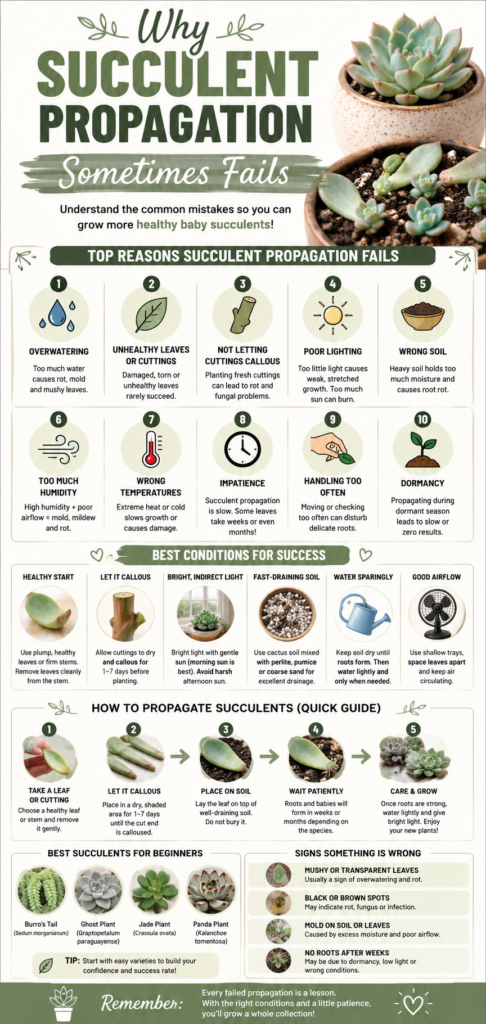
The biggest reason succulent propagation fails is simple: succulents are slow-growing desert plants that are extremely sensitive to moisture, temperature, and handling. Unlike many houseplants, they cannot tolerate constant watering or high humidity during propagation.
Most propagation failures happen because of:
- Overwatering
- Poor lighting
- Using unhealthy leaves or cuttings
- Rot
- Lack of patience
- Wrong temperatures
- Bad soil choices
- Propagating during dormancy
Once you understand these issues, propagation becomes much easier.
Using Unhealthy Leaves or Cuttings
One of the most overlooked reasons succulent propagation fails is starting with unhealthy plant material.
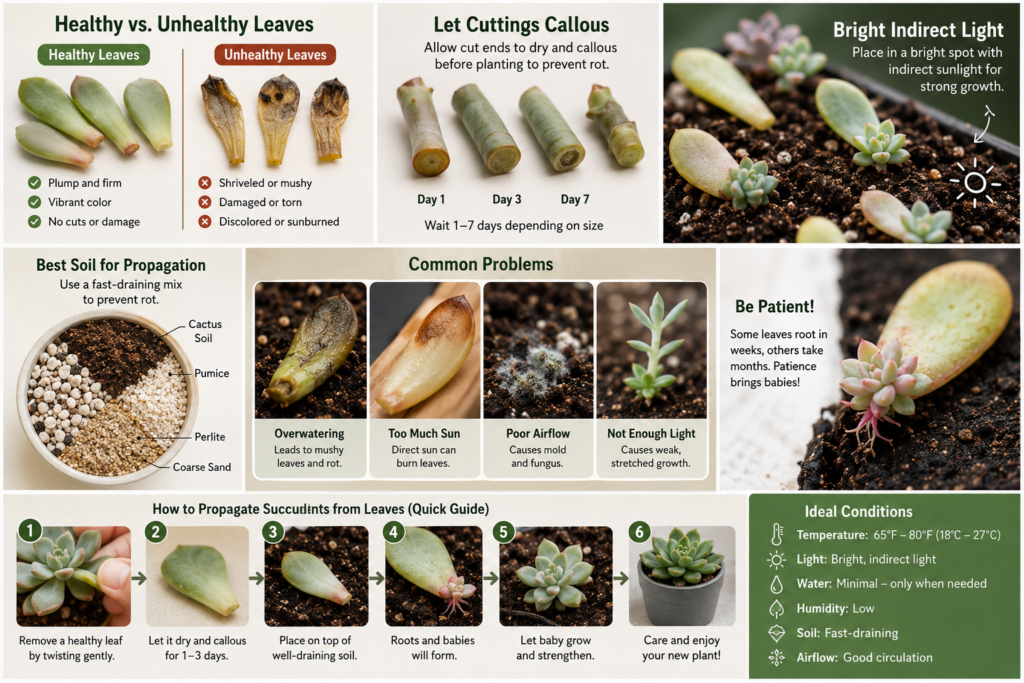
A damaged leaf usually will not propagate successfully. Leaves that are:
- Torn
- Crushed
- Mushy
- Sunburned
- Overwatered
- Extremely dehydrated
often die before roots or babies can form.
Healthy propagation starts with healthy succulents.
When removing a leaf, make sure the entire leaf comes off cleanly from the stem. Even a tiny tear at the base can prevent successful propagation.
Stem cuttings should also be healthy and firm. Avoid using blackened, squishy, or diseased stems.
Overwatering During Propagation
Overwatering is the number one reason succulent propagation fails.
Many people assume baby succulents need frequent watering, but newly propagating succulents are extremely vulnerable to rot.
Succulent leaves already contain stored moisture and nutrients. During early propagation, the leaf feeds the developing roots and baby plant naturally.
Adding too much water too early can cause:
- Rotting leaves
- Mold growth
- Fungus gnats
- Mushy stems
- Root failure
In most cases, succulent leaves should stay dry until roots begin forming.
Signs of Overwatered Propagation
Watch for these warning signs:
- Leaves turning transparent
- Mushy or black spots
- Slimy texture
- Mold growing on soil
- Bad smell from the propagation tray
Once rot begins, recovery is difficult.
Not Letting Cuttings Callous
This is one of the biggest mistakes beginners make.
Fresh succulent cuttings have open wounds where they were removed from the parent plant. If planted immediately into moist soil, bacteria and fungi can enter the wound and cause rot.
Before planting stem cuttings, allow them to dry and callous over.
Most succulents need:
- 1–3 days for small cuttings
- 4–7 days for larger stems
The cut end should feel dry and sealed before planting.
Skipping this step is a major reason succulent propagation sometimes fails.
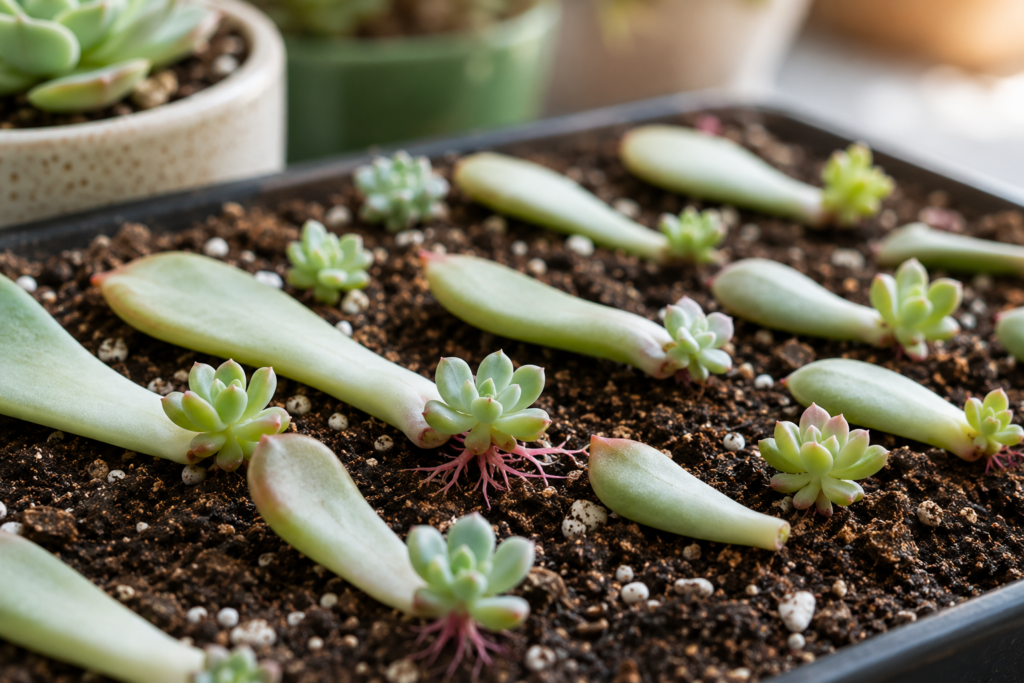
Poor Lighting Conditions
Light is critical for successful propagation.
Many people place propagations in dark corners or rooms with insufficient sunlight. Without enough light, propagations become weak and stretched.
This stretching is called etiolation.
Signs of poor lighting include:
- Long thin growth
- Pale leaves
- Weak baby succulents
- Slow root development
However, too much harsh sunlight can also damage propagations.
Fresh leaves and cuttings can burn easily in direct afternoon sun.
Best Lighting for Succulent Propagation
The ideal setup is:
- Bright indirect light
- Gentle morning sun
- Filtered outdoor light
- Grow lights for indoor setups
A bright windowsill facing east is often perfect.
Using the Wrong Soil
Heavy potting soil traps too much moisture around propagating succulents.
Standard houseplant soil is often far too dense for succulents.
Poor soil causes:
- Root rot
- Mold
- Fungus
- Slow growth
Succulent propagation needs fast-draining soil with excellent airflow.
Best Soil for Succulent Propagation
A good propagation mix usually contains:
- Cactus soil
- Perlite
- Pumice
- Coarse sand
Many growers use a 50/50 mix of cactus soil and pumice or perlite.
This allows moisture to drain quickly while still supporting root development.
Propagating During Dormancy
Not all succulents actively grow year-round.
Many succulents enter dormancy during parts of the year. During dormancy, growth slows dramatically, and propagation success rates often decrease.
For example:
- Many summer growers slow down in winter
- Some winter growers become dormant in summer
Trying to propagate during dormancy may lead to:
- Leaves drying out
- No root formation
- Very slow growth
Best Time for Succulent Propagation
Propagation usually works best during active growing seasons:
- Spring
- Early summer
- Early fall
This varies depending on the succulent species.
Too Much Humidity
High humidity can make succulent propagation difficult.
Succulents evolved in dry environments with strong airflow. Humid conditions increase the risk of:
- Mold
- Mildew
- Rot
- Fungus
Indoor propagation trays without airflow often become too humid.
Bathrooms and poorly ventilated rooms are especially problematic.
How to Reduce Humidity Problems
To improve airflow:
- Use shallow propagation trays
- Avoid humidity domes
- Space leaves apart
- Use fans indoors
- Keep propagations in dry rooms
Good air circulation is extremely important.
Impatience During Propagation
Succulent propagation is slow.
Many people give up too early because they expect instant results.
Some leaves root within 1–2 weeks, while others may take several months.
Certain species naturally propagate more slowly than others.
For example:
- Echeverias often propagate easily
- Some aeoniums rarely propagate from leaves
- Haworthias grow very slowly
- Jade plants usually root quickly
Patience matters.
Handling Propagations Too Often
Constantly moving, checking, or touching propagations can interrupt root growth.
Tiny roots are fragile and easily damaged.
Common mistakes include:
- Pulling leaves up to check roots
- Repositioning cuttings repeatedly
- Watering too aggressively
- Frequently changing environments
Once roots begin forming, stability helps them develop properly.
Temperature Problems
Temperature strongly affects succulent propagation success.
Extreme cold slows growth dramatically and may cause rot.
Extreme heat can dry out leaves before roots form.
Ideal Temperature for Succulent Propagation
Most succulents propagate best between:
- 65°F–80°F
Avoid:
- Frost
- Heat waves
- Hot afternoon patios
- Cold garages
Moderate temperatures produce the best results.
Propagating the Wrong Way for Certain Succulents
Not all succulents propagate the same way.
This is a major reason succulent propagation sometimes fails.
Some succulents propagate well from leaves, while others do much better from stem cuttings or offsets.
For example:
Succulents That Usually Propagate Well From Leaves
- Echeveria
- Graptopetalum
- Sedum
Succulents Better From Stem Cuttings
- Jade Plant
- String of Pearls
Succulents Often Propagated by Offsets
- Haworthia
- Aloe Vera
Understanding the correct propagation method greatly improves success.
Failing to Acclimate Baby Succulents
Tiny propagated succulents are more delicate than mature plants.
Suddenly placing them into harsh direct sun or heavy watering schedules can shock or kill them.
Young propagations need gradual adjustment.
Increase sunlight slowly over several weeks.
Mold and Fungus Issues
Mold often appears when conditions are too wet and stagnant.
White fuzzy growth on soil or leaves usually indicates excessive moisture combined with poor airflow.
To prevent fungus:
- Use clean trays
- Avoid overwatering
- Improve airflow
- Use sterile soil
- Remove rotting leaves quickly
Healthy propagation environments stay relatively dry.
Can You Save Failed Succulent Propagation?
Sometimes, yes.
If rot has not spread too far, you may be able to save the propagation.
Try:
- Removing damaged tissue
- Letting cuttings dry longer
- Moving to brighter light
- Improving airflow
- Switching to drier soil
However, completely mushy or black propagations are usually beyond saving.
Even experienced growers lose propagations regularly.
Best Succulents for Beginners to Propagate
If you are new to propagation, start with easy varieties.
Good beginner choices include:
- Burro’s Tail
- Ghost Plant
- Jade Plant
- Panda Plant
These tend to root more reliably and tolerate beginner mistakes better.
How to Improve Succulent Propagation Success
Here are the most effective ways to improve your results:
Start With Healthy Leaves
Only use plump, undamaged leaves or healthy stems.
Use Fast-Draining Soil
Avoid heavy potting mixes.
Water Sparingly
Less water is usually better.
Provide Bright Indirect Light
Avoid deep shade and harsh afternoon sun.
Allow Proper Callousing
Never plant fresh wet cuttings immediately.
Be Patient
Some propagations simply take time.
Final Thoughts
If you have struggled with propagation, do not get discouraged. Understanding why succulent propagation sometimes fails is the first step toward becoming successful at it.
Most failures come down to moisture, lighting, airflow, or impatience. Once you adjust these conditions, your success rate can improve dramatically.
Succulent propagation is partly science and partly experimentation. Even expert growers lose leaves and cuttings sometimes. The key is learning from each attempt and improving your setup over time.
With healthy plant material, proper lighting, fast-draining soil, and patience, you can successfully grow dozens of new succulents from a single plant.
FAQ About Succulent Propagation Failures
Why are my succulent leaves shriveling during propagation?
Shriveling is often normal because the mother leaf transfers nutrients to the baby plant. However, if leaves shrivel very quickly without root growth, the environment may be too hot or dry.
Should I mist succulent propagations?
Usually no. Frequent misting often causes rot and fungus. Most succulent propagations prefer dry conditions.
Why are my succulent cuttings turning black?
Black stems or leaves usually indicate rot caused by too much moisture or fungal infection.
How long does succulent propagation take?
Most propagations take anywhere from 2 weeks to several months depending on the species and growing conditions.
Can you propagate succulents in water?
Some succulents can root in water, but soil propagation is generally safer because water propagation increases the risk of rot when transferred later.