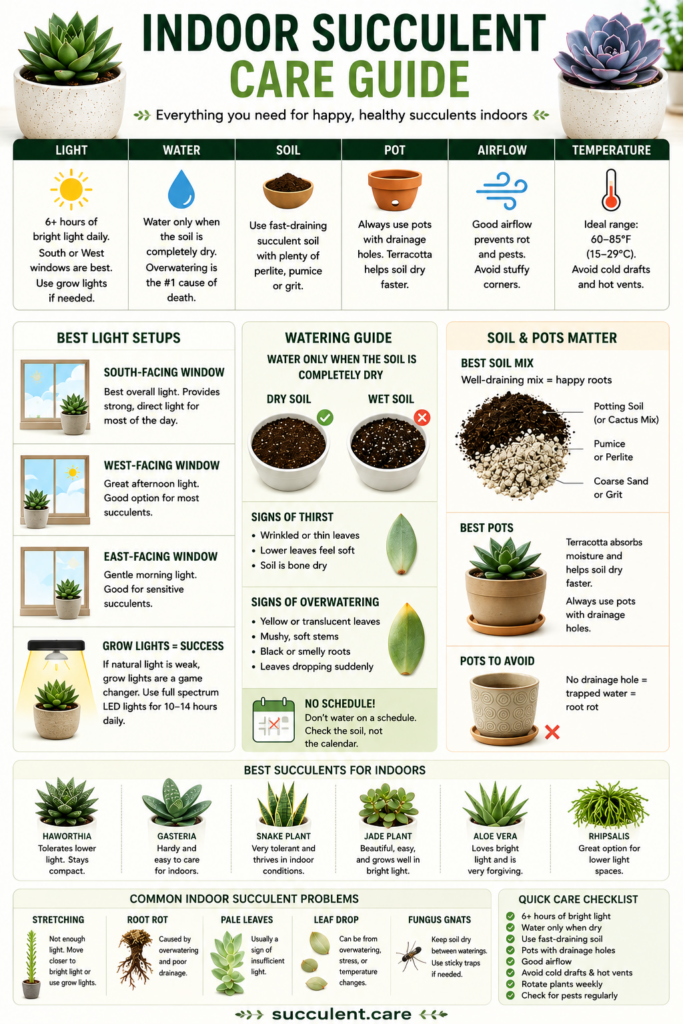
If you’ve ever brought home a beautiful succulent only to watch it slowly stretch, droop, rot, or lose leaves inside your house, you are definitely not alone. Indoor succulent care is very different from outdoor succulent care, and that’s where many beginners accidentally run into problems.
Most succulents naturally grow in bright, dry environments with strong sunlight, airflow, and fast-draining soil. Inside our homes, conditions are usually the exact opposite. Light is weaker, air is stagnant, soil stays wet longer, and heating or air conditioning can stress plants in ways many people don’t realize.
The good news is that indoor succulents absolutely can thrive when you understand what they actually need. Once you learn how light, watering, temperature, and airflow affect your plants, indoor succulent care becomes much easier.
This complete indoor succulent care guide will walk you through everything you need to know to keep your succulents healthy indoors.
Dig in!
Why Succulents Struggle Indoors
One of the biggest misconceptions about succulents is that they are “easy plants that survive anywhere.” While succulents are low maintenance compared to many houseplants, they are not adapted to dark indoor spaces.
Most succulents evolved in areas with:
- Intense sunlight
- Dry air
- Excellent airflow
- Infrequent rainfall
- Fast-draining soil
Inside a house, they often experience:
- Weak sunlight
- Poor ventilation
- Overwatering
- Humidity buildup
- Cold drafts
- Artificial heating and cooling
This mismatch is why so many indoor succulents develop problems.
Common signs your succulent is struggling indoors include:
- Stretching toward light
- Dropping leaves
- Mushy stems
- Yellow leaves
- Rotting roots
- Weak growth
- Pale colors
- Mold or fungus gnats
Understanding the indoor environment is the first step toward healthier plants.
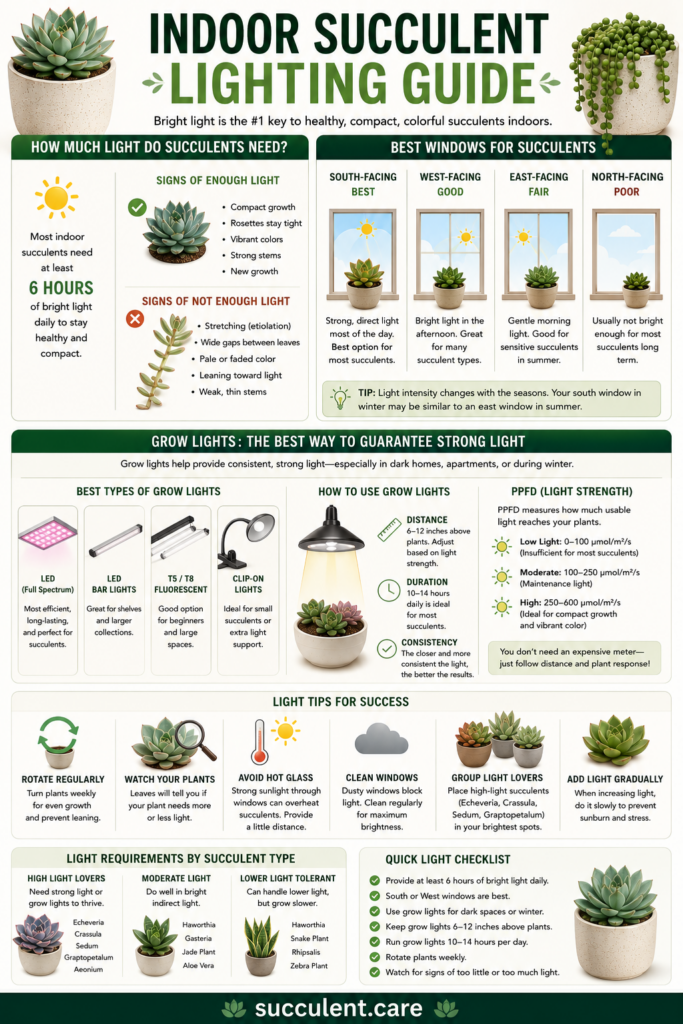
Best Indoor Light for Succulents
Light is the most important part of indoor succulent care.
Many people think placing a succulent “near a window” is enough. Unfortunately, indoor light is dramatically weaker than outdoor sunlight, even directly beside glass.
Most succulents need at least 6 hours of bright light daily to maintain compact, healthy growth.
South-Facing Windows Are Usually Best
In the Northern Hemisphere, south-facing windows typically provide the strongest and longest light exposure.
Good options include:
- South-facing windows
- Bright west-facing windows
- Some east-facing windows
North-facing windows are usually too dark for most succulents long term.
Signs Your Succulent Needs More Light
When succulents don’t receive enough light, they begin stretching. This process is called etiolation.
Signs include:
- Long stems
- Wide spacing between leaves
- Leaning toward windows
- Pale or faded color
- Flattened rosettes
Stretching is one of the most common indoor succulent problems.
For a deeper explanation, read our article about why succulents stretch indoors.
Should You Use Grow Lights?
Grow lights can completely change indoor succulent success.
If your home lacks bright natural sunlight, grow lights often provide more reliable conditions than windows alone.
Grow lights are especially useful for:
- Apartments
- Dark rooms
- Winter care
- Shelving setups
- Office succulents
LED full-spectrum grow lights are usually the best choice because they:
- Stay cooler
- Use less electricity
- Last longer
- Provide strong light
Most indoor succulents do best with grow lights running 10–14 hours daily.
A good grow light setup can prevent stretching and improve color dramatically.
How Often to Water Indoor Succulents
Overwatering is the number one cause of indoor succulent death.
Indoors, soil dries much slower because there is:
- Less sunlight
- Less airflow
- Lower evaporation
- More humidity retention
This means indoor succulents usually need less water than outdoor plants.
Never Water on a Schedule
One of the biggest indoor watering mistakes is watering “once a week.”
Succulents should only be watered when the soil is completely dry.
Instead of following a schedule:
- Check the soil first
- Lift the pot to feel weight changes
- Look for signs of thirst
Signs Your Succulent Needs Water
Healthy thirst signs include:
- Slightly wrinkled leaves
- Softer lower leaves
- Dry soil throughout the pot
Signs of Overwatering
Overwatered succulents may develop:
- Yellow leaves
- Mushy stems
- Transparent leaves
- Black spots
- Sudden leaf drop
- Rotting roots
If you are unsure whether your plant needs water, waiting longer is usually safer than watering too soon.
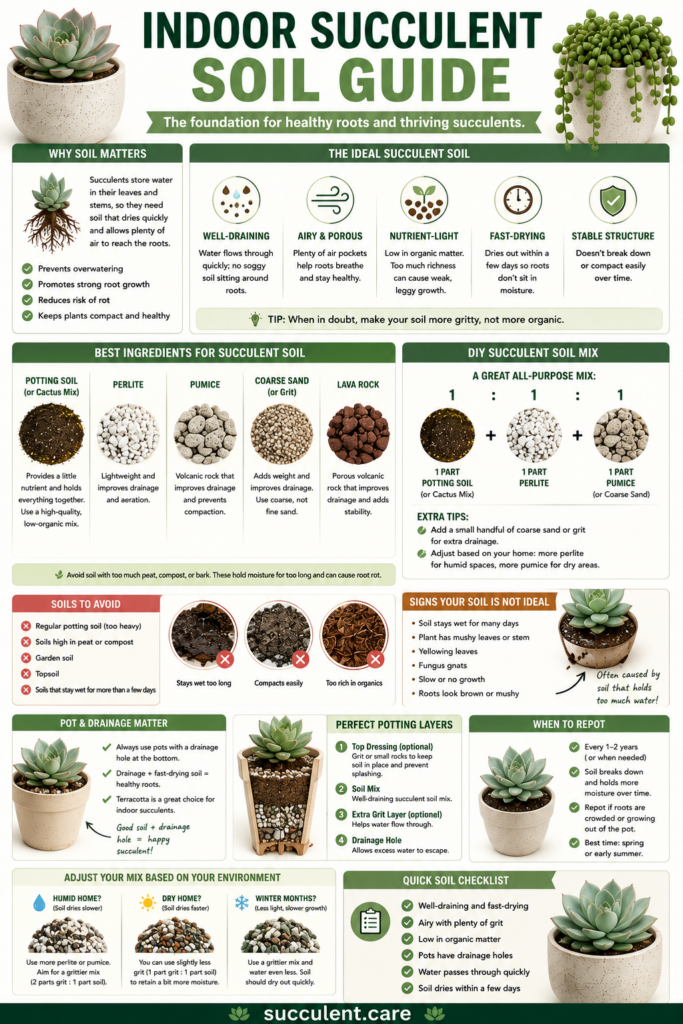
Best Soil for Indoor Succulents
Indoor succulents need soil that dries quickly.
Regular potting soil often holds too much moisture and can lead to root rot.
A good succulent soil mix should contain:
- Drainage material
- Air pockets
- Fast-drying ingredients
Common ingredients include:
- Perlite
- Pumice
- Coarse sand
- Grit
- Cactus mix
Many succulent growers add extra perlite or pumice to store-bought cactus soil to improve drainage.
Terracotta Pots Help Indoors
Terracotta pots are often better for indoor succulents because they absorb excess moisture through the clay.
Benefits include:
- Faster drying
- Better airflow
- Reduced rot risk
Decorative pots without drainage holes are one of the biggest causes of indoor succulent failure.
Always choose pots with drainage holes whenever possible.
Best Succulents for Indoors
Some succulents adapt to indoor conditions much better than others.
High-light succulents like many Echeverias often struggle indoors unless they receive very strong light or grow lights.
More forgiving indoor succulents include:
Haworthia
Haworthia plants tolerate lower light better than many rosette succulents and stay compact indoors.
Gasteria
Gasteria species are hardy indoor growers with thick leaves and slower growth habits.
Snake Plant
Dracaena plants tolerate indoor environments extremely well and are popular beginner plants.
Jade Plant
Crassula plants can grow beautifully indoors when placed in strong light.
Aloe Vera
Aloe plants prefer bright windows and fast-draining soil.
Rhipsalis
Rhipsalis varieties tolerate lower light conditions better than desert succulents.
Indoor Temperature and Airflow Problems
Indoor airflow matters more than many people realize.
Outside, succulents experience:
- Wind
- Air circulation
- Fast evaporation
- Temperature changes
Inside homes, stagnant air can trap moisture around roots and leaves.
Air Conditioning Can Stress Succulents
Air conditioning may create:
- Sudden temperature swings
- Dry air
- Cold drafts
- Leaf curling
- Slow growth
Heating vents during winter can also dry plants excessively.
Avoid placing succulents:
- Directly under AC vents
- Near heaters
- Against freezing windows
- In humid bathrooms without airflow
Common Indoor Succulent Problems
Stretching
Usually caused by insufficient light.
Fixes include:
- Moving closer to brighter windows
- Adding grow lights
- Rotating pots regularly
Root Rot
Usually caused by:
- Overwatering
- Poor drainage
- Heavy soil
Signs include:
- Mushy stems
- Black roots
- Foul smells
- Sudden collapse
Dropping Leaves
Leaf drop may occur from:
- Overwatering
- Sudden environmental changes
- Stress
- Temperature swings
Pale Color
Indoor succulents often lose vibrant stress colors because indoor light is weaker than outdoor sun.
Fungus Gnats
Fungus gnats thrive in constantly moist soil.
Allowing soil to fully dry between watering helps prevent infestations.
Seasonal Indoor Succulent Care
Indoor succulent care changes throughout the year.
Winter
Winter is often the hardest season for indoor succulents because:
- Days are shorter
- Light is weaker
- Soil dries slower
Many succulents need significantly less water during winter.
Grow lights become especially helpful during this season.
Summer
During summer:
- Windows may become extremely hot
- Soil may dry faster
- Some succulents grow more actively
Watch for sunburn near hot glass during heat waves.
Indoor Succulent Care Checklist
Here is a simple indoor succulent care checklist to help your plants thrive:
- Use fast-draining succulent soil
- Always use pots with drainage holes
- Water only when soil is completely dry
- Provide at least 6 hours of bright light
- Rotate plants weekly
- Avoid cold drafts and AC vents
- Use grow lights if needed
- Watch for stretching
- Avoid overcrowding plants
- Check roots if plants become mushy
Final Thoughts on Indoor Succulent Care
Indoor succulent care can feel frustrating at first because most homes simply do not provide the natural conditions succulents evolved to grow in. However, once you understand how light, watering, airflow, and soil work together, keeping healthy indoor succulents becomes much easier.
The biggest mistake most people make is treating succulents like regular houseplants. Succulents need brighter light, less water, and faster-draining conditions than many indoor plants.
If you focus on improving light and avoiding overwatering, you will already solve most indoor succulent problems before they start.
Healthy indoor succulents are absolutely possible — they just need the right environment.
Frequently Asked Questions
Can succulents survive indoors?
Yes, many succulents can survive indoors if they receive enough bright light and proper watering.
Why are my succulents dying indoors?
The most common causes are:
- Insufficient light
- Overwatering
- Poor drainage
- Weak airflow
How often should succulents be watered indoors?
There is no universal schedule. Indoor succulents should only be watered when the soil is fully dry.
What is the best window for succulents?
South-facing windows usually provide the strongest indoor sunlight.
Do succulents need grow lights indoors?
Many indoor succulents benefit greatly from grow lights, especially during winter or in darker homes.