Succulents are often advertised as “easy houseplants” that can survive almost anything. But many plant owners quickly discover the opposite. Their once healthy succulent suddenly turns mushy, stretches toward the window, drops leaves, or completely dies indoors while the same plant thrives outside with almost no attention.
If you’ve been wondering why succulents die faster inside than outside, you are not alone. This is one of the most common problems succulent owners face.
The truth is that succulents are not naturally indoor plants. Most succulents evolved in harsh outdoor environments with intense sunlight, moving air, temperature changes, and fast-draining soil. When we bring them inside, we unintentionally remove many of the conditions they need to survive.
Understanding why succulents die indoors can help you avoid the most common mistakes and keep your plants healthy for years instead of weeks.
Dig in!
Why Succulents Die Faster Indoors
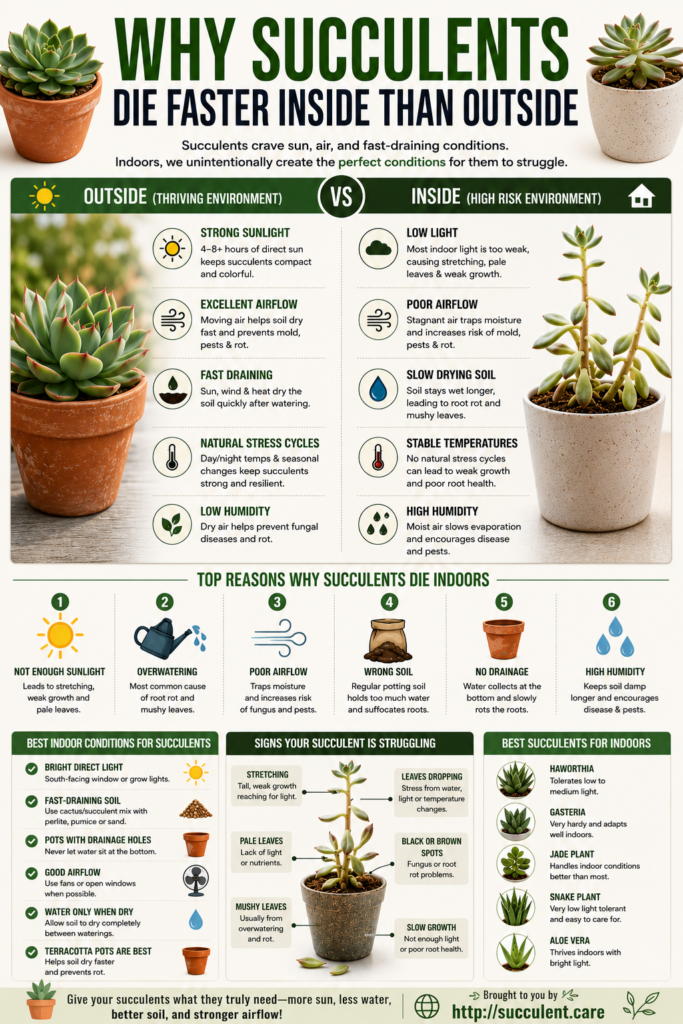
The biggest reason why succulents die indoors is that indoor environments are very different from the natural conditions succulents evolved in.
Inside a home, succulents often receive:
- Too little sunlight
- Poor airflow
- Excess moisture
- High humidity
- Incorrect watering schedules
- Weak drainage
- Stable temperatures without natural stress cycles
Outside, nature handles many of these problems automatically.
Outdoor succulents get stronger sunlight, faster soil drying, better airflow, and healthier root conditions. Indoors, even well-meaning plant owners accidentally create an environment that slowly kills the plant.
Lack of Sunlight Is a Major Reason Why Succulents Die
One of the biggest reasons why succulents die indoors is insufficient light.
Most succulents need at least 4 to 6 hours of direct sunlight daily. Some varieties need even more. Indoor lighting is dramatically weaker than outdoor sunlight, even near bright windows.
A succulent sitting a few feet away from a window may actually be receiving only a tiny fraction of the light it would get outdoors.
When succulents do not receive enough sunlight, they begin to stretch. This process is called etiolation.
Signs of low light include:
- Tall stretched stems
- Wide gaps between leaves
- Pale coloring
- Weak floppy growth
- Leaning toward windows
- Leaves falling off easily
Over time, weakened growth makes the plant more vulnerable to rot, pests, and disease.
Overwatering Explains Why Succulents Die So Often Indoors
Another major reason why succulents die indoors is overwatering.
Succulents store water inside their leaves, stems, and roots. They are designed to survive drought. Indoors, soil dries much slower because there is less heat, wind, and sunlight.
Many people water indoor succulents on a schedule instead of checking whether the soil is actually dry.
This creates constantly damp roots, which leads to root rot.
Common signs of overwatering include:
- Mushy leaves
- Yellow leaves
- Black stems
- Leaves dropping suddenly
- Transparent or squishy foliage
- Foul smell from soil
Root rot is one of the fastest ways succulents die indoors. Once the roots begin rotting, the plant may collapse very quickly.
Outside, soil usually dries faster after watering, reducing the risk of rot.
Poor Airflow Contributes to Why Succulents Die Indoors
Outdoor succulents constantly experience fresh moving air. Indoors, airflow is often limited.
Poor airflow traps moisture around the plant and soil. This increases the risk of:
- Mold
- Mildew
- Fungus
- Root rot
- Mealybugs
- Fungal infections
Good airflow helps succulent soil dry properly and keeps leaves healthier.
If your succulents live indoors, try placing them:
- Near open windows
- Near ceiling fans
- In rooms with ventilation
- Away from crowded plant shelves
Many indoor plant setups look beautiful but unintentionally create stagnant humid air that contributes to succulent decline.
Wrong Soil Is Another Reason Why Succulents Die
Regular potting soil holds too much moisture for succulents.
Succulent roots need oxygen. Dense wet soil suffocates roots and causes rot.
Outside, natural soil often drains quickly. Indoors, many store-bought succulent arrangements are planted in peat-heavy mixes that stay wet for far too long.
A good succulent soil mix should contain gritty materials like:
- Pumice
- Perlite
- Coarse sand
- Gravel
- Crushed granite
Fast-draining soil is one of the most important factors in preventing succulent death indoors.
Decorative Pots Cause Many Indoor Succulent Problems
Many decorative pots sold for succulents do not have drainage holes.
This is a huge problem.
Without drainage, excess water collects at the bottom of the pot and slowly rots the roots.
One hidden reason why succulents die is that water becomes trapped underneath the soil where owners cannot see it.
Always choose pots with drainage holes whenever possible.
Terracotta pots are especially helpful because they allow moisture to evaporate through the sides of the pot, helping soil dry faster.
Humidity Plays a Bigger Role Than Most People Realize
Many succulents come from dry desert or semi-arid regions. Indoor humidity can create major problems.
Bathrooms, kitchens, and humid climates often hold moisture in the air for long periods. This slows evaporation and keeps succulent soil damp longer than expected.
High humidity increases the risk of:
- Root rot
- Fungal disease
- Edema
- Leaf splitting
- Pest infestations
This is another important reason why succulents die faster indoors than outdoors.
Outside, natural airflow and sunlight usually help moisture evaporate much more quickly.
Temperature Stress Helps Outdoor Succulents Stay Strong
Many people assume stable indoor temperatures are healthier for plants. Surprisingly, mild outdoor stress often helps succulents grow stronger.
Outdoor succulents experience:
- Cooler nights
- Warmer days
- Seasonal temperature shifts
- Natural dormancy cycles
These environmental changes help regulate growth and water usage.
Indoors, constant temperatures can confuse growth cycles and contribute to weak stretched growth.
Of course, extreme frost or heat can still damage succulents outdoors, but moderate outdoor conditions are often healthier than stagnant indoor environments.
Indoor Succulents Often Get Watered Too Frequently
People tend to “care” indoor plants to death.
Because indoor succulents are visible every day, owners often feel tempted to water them too often.
Healthy succulent care involves patience.
Instead of watering weekly, focus on watering only when the soil becomes completely dry.
A better watering routine is:
- Check soil dryness fully
- Water deeply
- Allow all excess water to drain
- Wait until the soil dries completely again
Some indoor succulents may only need water every 2 to 4 weeks depending on lighting and climate.
Why Succulents Die After Bringing Them Indoors
Many succulents struggle during seasonal transitions.
A plant thriving outdoors may suddenly decline after being moved inside for winter.
This happens because the succulent suddenly loses:
- Intense sunlight
- Wind exposure
- Temperature variation
- Fast evaporation
- Lower humidity
The plant cannot always adjust quickly enough.
If you move succulents indoors seasonally, try to place them in the brightest possible location immediately. Grow lights can also help reduce shock.
The Best Indoor Conditions for Succulents
If you want healthy indoor succulents, focus on recreating outdoor conditions as closely as possible.
Here are the ideal conditions:
Bright Direct Light
South-facing windows usually work best in the Northern Hemisphere. Grow lights may be necessary for darker homes.
Fast-Draining Soil
Use gritty cactus or succulent soil with extra drainage materials.
Proper Drainage Holes
Never allow water to sit inside decorative containers.
Good Airflow
Avoid stagnant humid rooms.
Infrequent Watering
Allow soil to dry fully between waterings.
Terracotta Pots
These help prevent excess moisture buildup.
Best Succulents for Indoor Growing
Some succulents adapt better to indoor life than others.
Easier indoor succulents include:
- Haworthia
- Gasteria
- Snake Plant
- Jade Plant
- Aloe Vera
These varieties generally tolerate lower light better than highly sun-demanding succulents like many echeverias.
Signs Your Succulent Needs More Outdoor Time
Sometimes the healthiest option is simply moving your succulent outdoors gradually.
Signs your succulent may benefit from outdoor conditions include:
- Constant stretching
- Repeated leaf drop
- Slow growth
- Mushy stems
- Persistent rot
- Weak pale leaves
- Repeated pest problems
Even partial outdoor time on a covered patio can dramatically improve succulent health.
Always acclimate slowly to prevent sunburn.
Final Thoughts on Why Succulents Die Indoors
Understanding why succulents die faster inside than outside can completely change the way you care for your plants.
Succulents are survivors in nature, but indoor conditions often remove the exact things that keep them healthy. Low light, excess moisture, poor airflow, and improper soil are the biggest causes of indoor succulent death.
The good news is that most succulent problems are preventable.
Once you recreate the conditions succulents naturally prefer, they usually become much easier to care for. More sunlight, less water, better drainage, and stronger airflow can make the difference between a struggling plant and a thriving one.
If you’ve been frustrated trying to figure out why succulents die indoors, remember this: most succulents are not difficult plants. They are simply misunderstood plants growing in environments they were never naturally designed for.