Succulents are known for being low-maintenance plants, which is why it can feel alarming when healthy-looking leaves suddenly start falling off. One day your plant looks full and vibrant, and the next day leaves are scattered across the soil. If you’ve found yourself asking, “Why is my succulent dropping leaves?” you’re not alone.
The good news is that leaf drop is usually your succulent’s way of communicating that something in its environment has changed. In many cases, the problem can be fixed quickly once you identify the cause.
In this guide, you’ll learn the most common reasons succulents lose leaves suddenly, how to tell the difference between normal and unhealthy leaf drop, and what you can do to save your plant before the damage gets worse.
Dig in!
Is It Normal for Succulents to Lose Leaves?
Before assuming the worst, it’s important to know that some leaf loss is completely normal.
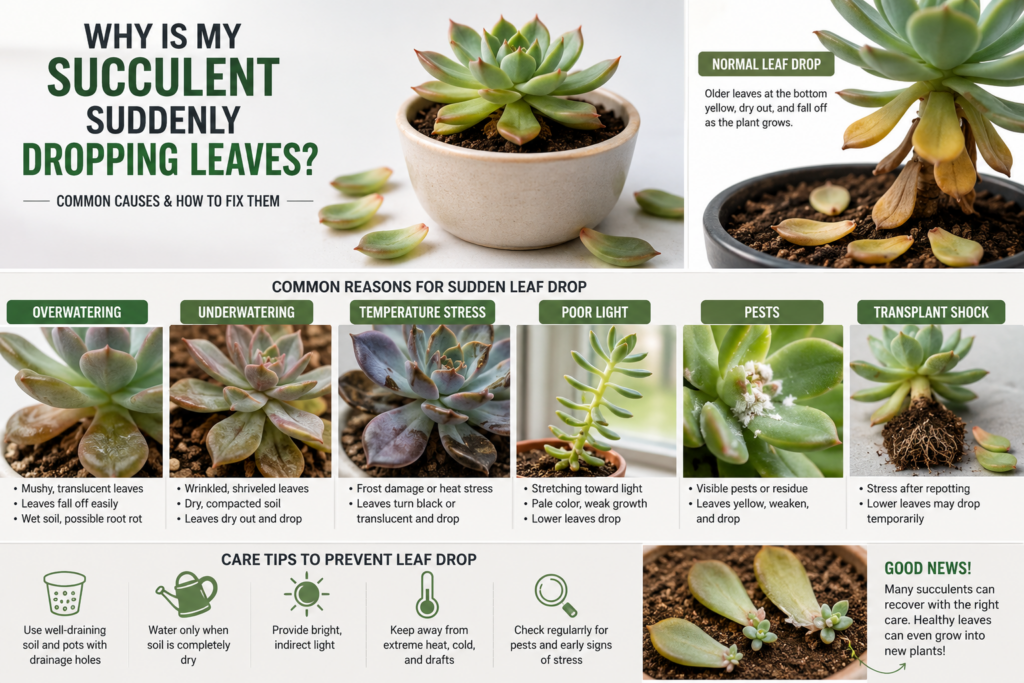
Most succulents naturally shed older leaves from the bottom of the plant as they grow. These leaves usually:
- Turn yellow or slightly translucent first
- Dry out slowly
- Fall from the very bottom row only
- Leave the rest of the plant looking healthy
This is part of the plant’s normal growth cycle and usually isn’t a reason to worry.
However, sudden or excessive leaf drop is a sign that something is wrong.
Warning signs include:
- Multiple leaves falling at once
- Healthy-looking leaves dropping suddenly
- Mushy or translucent leaves
- Leaves dropping from the middle or top of the plant
- Stem rot or discoloration
- Rapid leaf loss over a few days
If you notice any of these symptoms, your succulent likely needs attention.
Overwatering Is the Most Common Cause
If your succulent is suddenly dropping leaves, overwatering is the first thing to check.
Succulents store water inside their leaves, stems, and roots. Because of this, they do not need frequent watering. When the soil stays wet for too long, the roots begin to suffocate and rot.
One of the earliest signs of overwatering is leaves falling off with the slightest touch.
Signs of an Overwatered Succulent
Common symptoms include:
- Mushy or soft leaves
- Yellow, translucent, or swollen leaves
- Leaves falling off easily
- Black spots or stem discoloration
- Wet soil that stays damp for days
- A rotting smell near the roots
Overwatered leaves often look bloated or squishy before they drop.
You might also like: How & When to Water Succulents So They Don’t Die (2023 Update)
How to Fix an Overwatered Succulent
If you think overwatering is the problem for your succulent dropping leaves:
- Stop watering immediately.
- Check the soil moisture several inches down.
- Remove the plant from wet soil if necessary.
- Inspect the roots for rot.
- Trim away black or mushy roots.
- Repot in dry, well-draining succulent soil.
- Wait several days before watering again.
Make sure your pot has a drainage hole. Succulents sitting in containers without drainage are much more likely to develop root rot.
Underwatering Can Also Cause Leaf Drop
Many people assume succulents never need much water, but underwatering can also lead to your succulent dropping leaves.
When a succulent becomes severely dehydrated, it starts using stored moisture from its lower leaves to survive. These leaves shrivel, dry out, and eventually fall off.
Signs of an Underwatered Succulent
Look for these symptoms:
- Wrinkled or shriveled leaves
- Thin, limp foliage
- Dry, compacted soil
- Crispy leaf edges
- Slow growth
- Leaves drying up before falling
Unlike overwatered leaves, underwatered leaves usually feel dry rather than mushy.
How to Fix an Underwatered Succulent
If dehydration is the issue for your succulent dropping leaves:
- Water deeply until water drains from the bottom
- Allow excess water to fully drain away
- Resume watering only when the soil becomes completely dry again
A healthy watering routine is more important than watering on a strict schedule. Factors like temperature, pot size, and humidity all affect how quickly soil dries.
Sudden Temperature Changes Can Shock Succulents
Succulents can become stressed by rapid temperature swings.
If your succulent was recently exposed to:
- Frost
- Cold drafts
- Heat waves
- Hot car rides
- Sudden outdoor sun exposure
- Air conditioning vents
…it may respond by dropping leaves.
Temperature shock damages plant cells quickly, especially in soft-leaved succulents like Echeveria and Graptoveria.
Signs of Temperature Stress
- Leaves turning black or translucent
- Sudden leaf drop overnight
- Soft spots after frost exposure
- Sunburned patches
- Wilted appearance despite proper watering
Too Little Light Weakens Succulents
Succulents need bright light to stay compact and healthy.
When they don’t receive enough sunlight, they stretch toward light sources in a process called etiolation. Weak, stretched growth often leads to unstable leaves that fall more easily.
Signs Your Succulent Needs More Light
- Long stems with wide gaps between leaves
- Pale coloring
- Leaning toward windows
- Weak or floppy growth
- Lower leaf drop
Most succulents prefer at least 4–6 hours of bright indirect light or direct morning sun daily.
Too Much Sun Can Also Cause Problems
Ironically, intense sunlight can also trigger leaf drop.
Succulents moved too quickly into harsh afternoon sun may become sunburned. Damaged leaves may dry out and fall away afterward.
Signs of Sunburn
- Brown, white, or tan patches
- Crispy spots
- Bleached leaves
- Sudden dry leaf drop
When increasing sunlight exposure, do it gradually over 1–2 weeks.
Transplant Shock After Repotting
Did your succulent start dropping leaves after being repotted?
This is very common.
Repotting disturbs the roots and temporarily stresses the plant. Some succulents react by sacrificing older leaves while they focus energy on root recovery.
What to Expect After Repotting
Mild symptoms can include:
- A few lower leaves dropping
- Slight wrinkling
- Temporary drooping
This usually improves within a couple of weeks if the roots remain healthy.
Avoid watering immediately after repotting unless the roots are extremely dry. Damaged roots are vulnerable to rot.
Pests Can Cause Succulent Leaves to Fall Off
Certain pests feed on succulent tissue and weaken the plant over time.
The most common succulent pests include:
- Mealybugs
- Spider mites
- Aphids
- Fungus gnats
- Scale insects
These insects stress the plant and may cause leaves to yellow, wilt, or drop.
Signs of Pest Problems
- Sticky residue
- White cotton-like fuzz
- Tiny webs
- Speckled leaves
- Deformed growth
- Small moving insects
Inspect underneath leaves and near stem joints carefully.
How to Treat Succulent Pests
You can often control mild infestations by:
- Isolating the plant
- Removing visible pests with rubbing alcohol
- Spraying with insecticidal soap
- Improving airflow
- Avoiding overwatering
Check nearby plants too, since pests spread easily indoors.
Root Rot Causes Severe Leaf Loss
Root rot is one of the most serious succulent problems and often begins with overwatering.
Once roots rot, they can no longer absorb water properly. The plant starts dropping leaves rapidly as it declines.
Signs of Root Rot
- Black or mushy roots
- Stem turning dark
- Leaves dropping rapidly
- Soft, collapsing plant structure
- Foul odor from soil
Unfortunately, advanced root rot can kill a succulent quickly.
Can a Succulent Recover After Dropping Leaves?
Yes, many succulents recover completely if the problem is caught early.
Succulents are resilient plants. Even severely stressed plants can bounce back with proper care.
Recovery depends on:
- How quickly the issue is corrected
- Whether the roots are still healthy
- The severity of rot or pest damage
- The plant species
If the stem and roots remain healthy, new growth often appears within a few weeks.
Should You Remove Fallen Leaves?
Yes, it’s usually best to remove dropped leaves from the soil surface.
Dead leaves can trap moisture and encourage:
- Mold
- Fungus
- Pests
- Rot
However, healthy fallen leaves can sometimes be propagated into new plants.
Popular succulents like Sedum, Graptopetalum, and Echeveria often grow baby plants from healthy leaves.
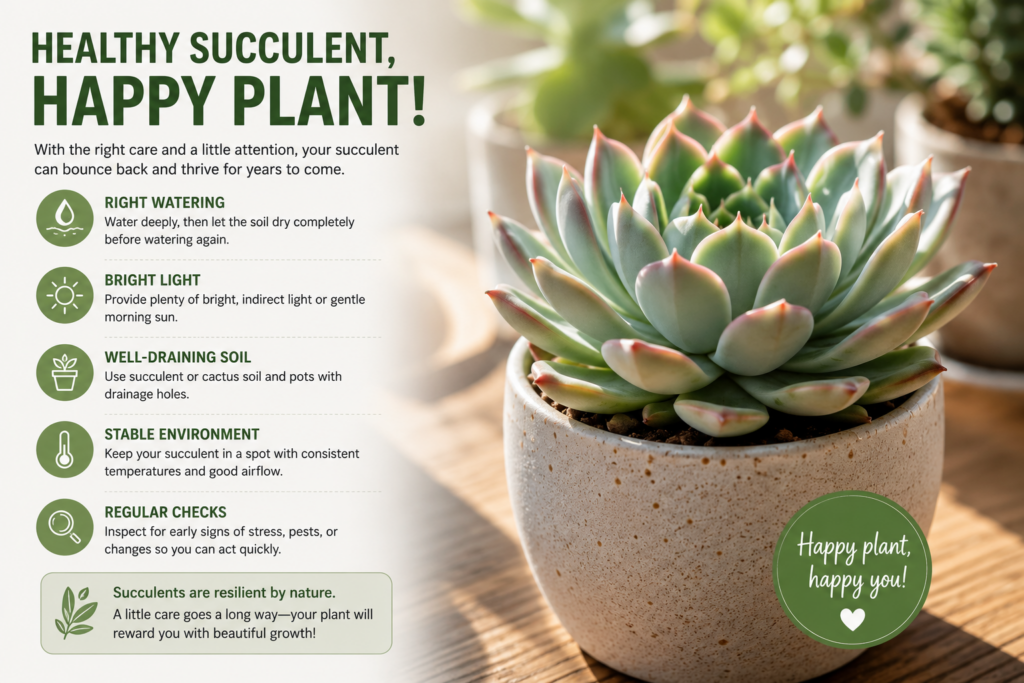
How to Prevent Succulent Leaf Drop
Prevention is much easier than fixing advanced problems.
Here are the best ways to keep your succulent healthy:
Use Well-Draining Soil
Always use cactus or succulent soil that dries quickly.
You can also improve drainage by adding:
- Perlite
- Pumice
- Coarse sand
Water Only When the Soil Is Dry
Do not water on a fixed schedule.
Instead:
- Check the soil first
- Water deeply
- Allow soil to dry completely before watering again
Provide Proper Lighting
Most succulents thrive in bright conditions.
Indoor succulents often do best near:
- South-facing windows
- East-facing windows
- Grow lights
Avoid Pots Without Drainage
Decorative pots without drainage holes are one of the biggest succulent killers.
Excess water must be able to escape.
Watch for Early Signs of Stress
The sooner you notice symptoms, the easier the plant is to save.
Pay attention to:
- Soft leaves
- Wrinkling
- Color changes
- Stretching
- Sudden leaf drop
Final Thoughts
If your succulent is suddenly dropping leaves, don’t panic. In most cases, the problem comes down to watering issues, lighting stress, temperature shock, or root problems.
Start by checking the soil moisture and inspecting the leaves closely. Mushy leaves usually point to overwatering, while shriveled leaves often signal dehydration.
Succulents are surprisingly tough plants. Once you correct the underlying issue, many recover beautifully and continue growing for years.
Learning to recognize the early warning signs will help you keep your succulents healthy, colorful, and thriving long-term.